





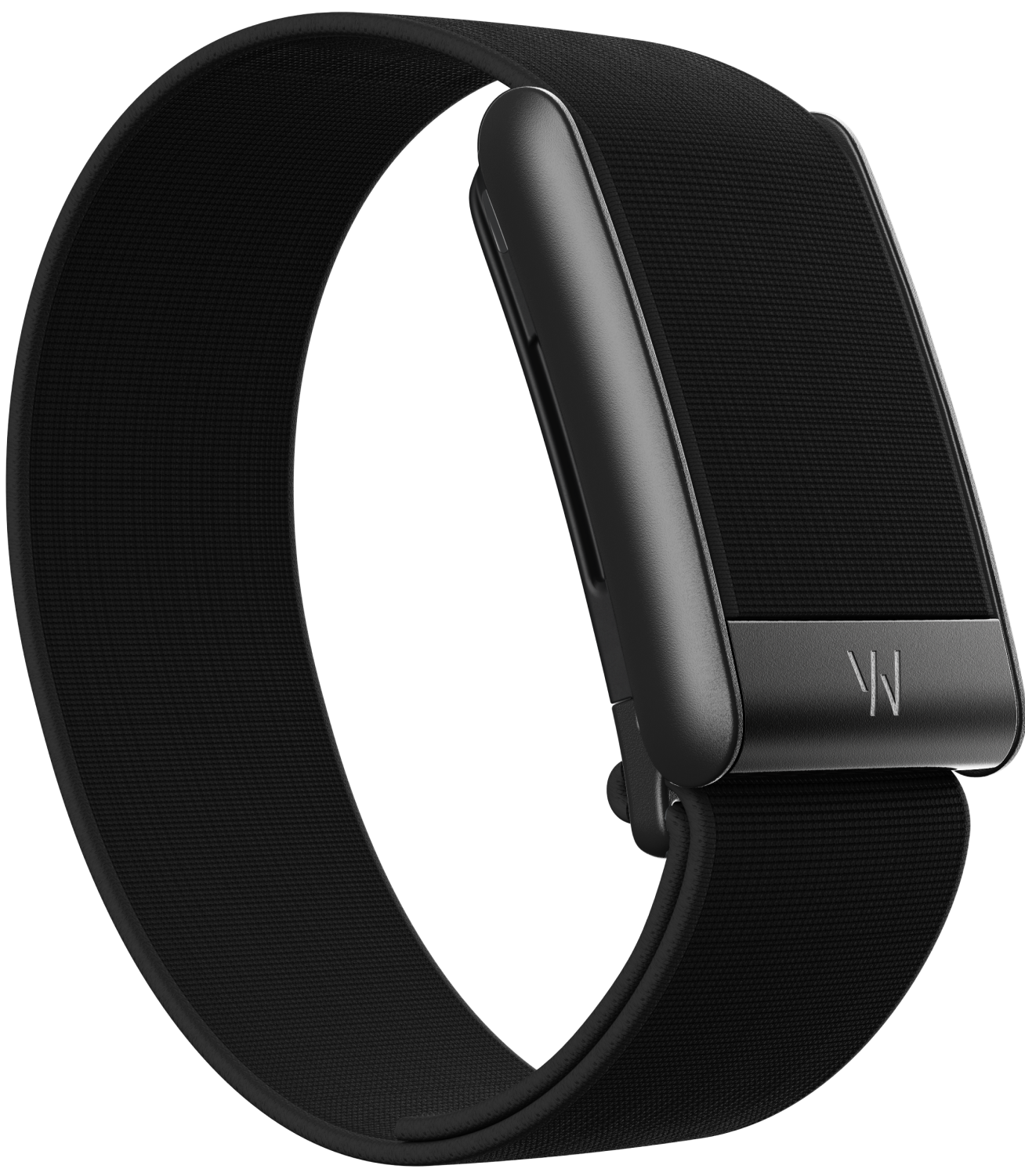


When Google announced the Fitbit Air, it stood apart from every other tracker in its category in one obvious way: no screen. No display, no notifications, no interface to interact with — just a lightweight band that sits on your wrist and monitors your health continuously while you get on with your life.
This article breaks down what every specification actually means, how each sensor works, and what kind of user this design is built for.
Design and Dimensions: Built to Disappear
The Google Fitbit Air tracker body weighs 5.2 grams on its own — 12 grams with the band. At 8.3mm thick, it ranks among the slimmest health trackers currently available. Most wearers report not noticing it within the first hour of use, which extends through sleep, workouts, and everyday wear without friction.
The housing is made from recycled polycarbonate and PBT plastics. The included band uses woven textile with a stainless steel buckle. Packaging is entirely plastic-free.
These dimensions aren't just an aesthetic choice. They're what allows continuous overnight wear without the bulk or pressure that causes most people to take off a standard smartwatch before bed — which is precisely when some of the most important health metrics are collected.
The Screenless Design: What It Means in Practice
The most common question about the Fitbit Air is why there's no display.
The screen in a typical wearable consumes significant battery, demands interaction from the user, and pulls attention to the wrist. Google's approach with the Fitbit Air separates data collection from data review entirely. The tracker collects continuously. The user reviews whenever they choose — in the Google Health app on their phone.
This decision produced a 7-day battery life at 8.3mm thickness and 12 grams total weight. It's not a limitation — it's the engineering trade-off that makes everything else possible.
For users who need real-time heart rate glances on their wrist or smartphone notifications, this design will feel restrictive. For users who want passive, always-on health monitoring that never interrupts them, it's purpose-built.
Sensors: What the Fitbit Air Measures and How
Continuous Heart Rate (PPG Sensor)
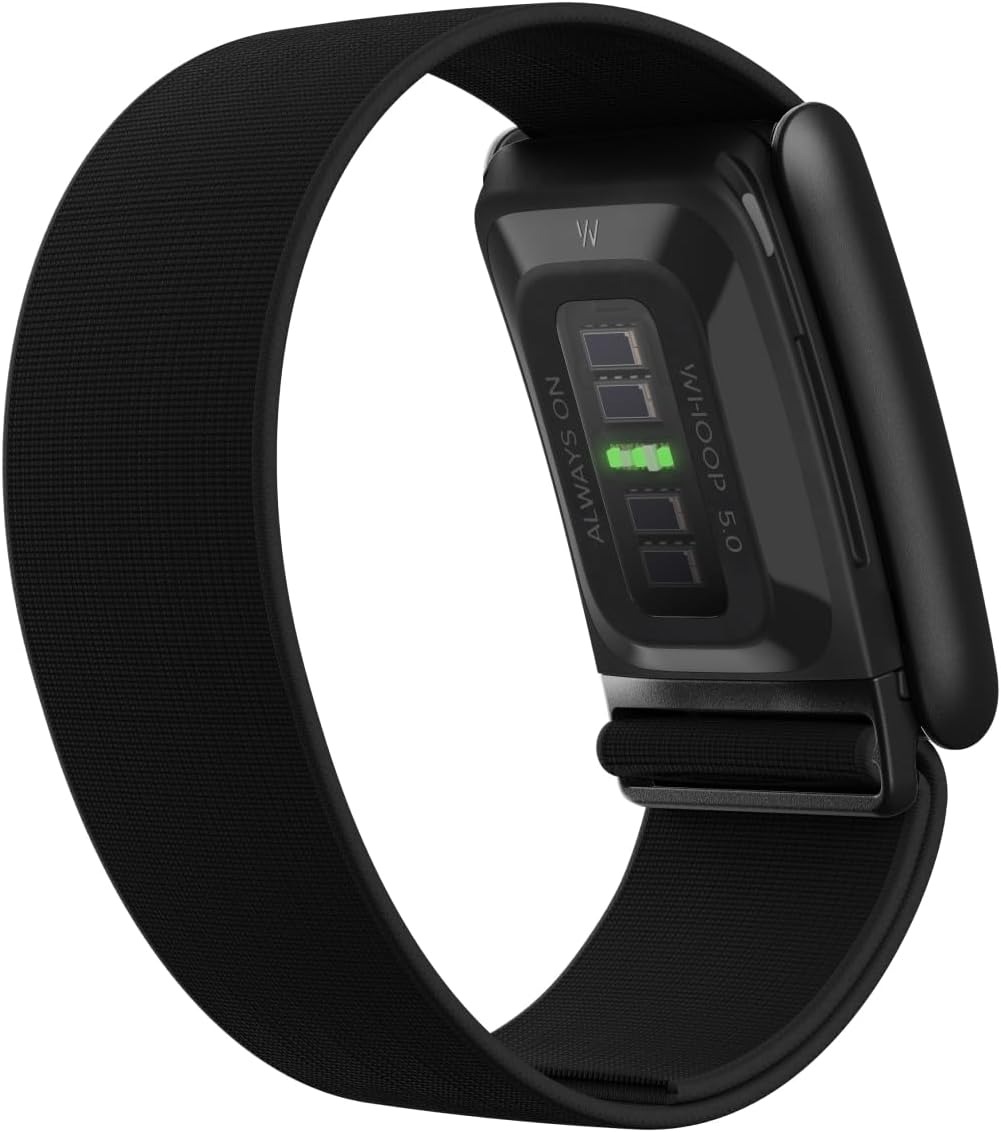
The Fitbit Air uses a photoplethysmography (PPG) optical sensor running continuously. It emits light into the skin and measures the changes in light absorption caused by blood flow to calculate heart rate. Readings are stored throughout the day and night and displayed as a continuous graph in the Google Health app.
Resting heart rate is calculated daily — the average of your lowest readings during periods of inactivity. This number is a reliable long-term indicator of cardiovascular fitness; it typically decreases as fitness improves and rises when the body is under stress or fighting illness.
Heart Rate Variability (HRV)
HRV measures the millisecond-level variation in time between consecutive heartbeats. Despite the name, a higher HRV is generally a positive signal — it indicates the autonomic nervous system is in balance and the body is recovering well. A sudden drop in HRV often precedes fatigue, illness, or overtraining.
The Fitbit Air measures HRV during sleep and surfaces it as a daily metric in the app, giving a baseline for understanding recovery patterns over time.
Blood Oxygen Saturation (SpO2)
The SpO2 sensor uses red and infrared light to measure how much oxygen your hemoglobin is carrying. Measurements happen periodically throughout the day and continuously overnight — the nighttime readings being the more clinically significant, as they can reveal drops in oxygen saturation associated with sleep-disordered breathing such as sleep apnea.
Breathing Rate and Skin Temperature
Breathing rate (breaths per minute) is tracked during sleep using the heart rate sensor data. Elevated breathing rate during sleep can indicate stress, illness, or respiratory issues.
Skin temperature variation tracks the deviation from your personal baseline each night. This metric is sensitive enough to detect early signs of fever, hormonal shifts, or other physiological changes before overt symptoms appear. Note that this measures relative change from your baseline — not absolute temperature.
AFib Detection: How It Works
Atrial fibrillation (AFib) is an irregular heart rhythm caused by disorganized electrical signals in the heart's upper chambers. Many people with AFib are asymptomatic for extended periods, making passive detection during everyday wear clinically meaningful.
The Google Fitbit Air monitors heart rhythm continuously during rest and sleep. If it detects an irregular pattern consistent with AFib, it sends a notification to the user suggesting they consult a healthcare provider. This is not a medical diagnosis — it is a screening signal intended to prompt further evaluation.
Having this capability in a tracker at this weight and form factor has historically been limited to premium smartwatches. Availability of the AFib notification feature varies by region.
Sleep Tracking: Accuracy, Stages, and Smart Wake
Sleep tracking is one of the strongest aspects of the Google Fitbit Air, backed by an updated machine learning model that Google states improves sleep stage accuracy by 15% compared to the previous Fitbit generation.
The tracker monitors:
- Light sleep — the transitional stage between wakefulness and deeper sleep
- Deep sleep — the physically restorative stage, important for immune function and physical recovery
- REM sleep — the stage most associated with memory consolidation and emotional processing
- Naps — detected and logged automatically
- Nighttime awakenings and movement
From these inputs, the app generates a daily Sleep Score out of 100, with a breakdown of what contributed positively or negatively. The score factors in duration, time in each stage, and restoration metrics like resting heart rate and HRV during sleep.
Smart Wake identifies the lightest point in your sleep cycle within a window you set in the app and wakes you with a gentle vibration at that moment — rather than at a fixed alarm time — making waking feel significantly less abrupt.
Automatic Exercise Detection
The Fitbit Air detects physical activity without manual input. When you begin moving with sustained effort, the tracker recognizes it as a workout and logs:
- Steps and distance
- Calories burned
- Active Zone Minutes — the time spent with your heart rate elevated into cardio-beneficial zones
Active Zone Minutes is Fitbit's proprietary metric, aligned with the WHO's physical activity guidelines for cardiovascular health. It's a more precise measure of effective exercise than step count alone, since it accounts for the intensity of the activity rather than just movement.
The Fitbit Air does not have onboard GPS. Route tracking for outdoor runs or walks uses your phone's GPS through the Google Health app.
Google Health App and the AI Coach
All data collected by the Fitbit Air is viewable in Google Health — available for Android 11+ and iOS 16.4+. The app displays historical trends for every metric, with charts, comparisons to your personal baselines, and weekly summaries.
Google Health Premium subscribers access a health coach powered by Gemini, Google's AI model. The coach builds personalized workout and sleep plans based on your actual tracked data — not generic templates — and answers health-related questions with evidence-backed responses. Every Fitbit Air includes a free three-month Premium trial.
The app also supports health data export in a structured format readable by healthcare professionals, allowing users to share their history with a doctor for clinical review.
Compatibility and Connectivity
| Android | 11 or higher |
| iOS | 16.4 or higher |
| Connectivity | Bluetooth |
| Required app | Google Health |
| Required account | Google Account |
| Simultaneous Pixel Watch pairing | Supported — both devices share one unified health record |
The ability to pair both the Fitbit Air and a Google Pixel Watch to the same Google Health account simultaneously is notable — users can switch between devices while maintaining one continuous health dataset.
Water Resistance
The Fitbit Air is rated 5ATM, meaning it is water-resistant to 50 meters. This covers swimming, showering, and water sports without concern.
Battery Life and Charging
Battery life is rated at up to 7 days under typical usage. Heavy use of connected GPS or intensive continuous syncing may reduce this. The tracker charges via a proprietary magnetic charging cable included in the box.
Full Specifications at a Glance
| Specification | Detail |
|---|---|
| Tracker weight (alone) | 5.2 g |
| Weight with band | 12 g |
| Thickness | 8.3 mm |
| Display | None |
| Sensors | Heart rate (PPG), HRV, SpO2, breathing rate, skin temperature |
| AFib detection | Yes (region-dependent) |
| GPS | None onboard — uses phone GPS |
| Water resistance | 5ATM / 50 meters |
| Battery life | Up to 7 days |
| Charging | Proprietary magnetic cable |
| Connectivity | Bluetooth |
| Available colors | Obsidian, Lavender, Berry, Fog, Rye |
| Housing materials | Recycled polycarbonate and PBT plastic |
| Band material | Woven textile, stainless steel buckle |
| Packaging | 100% plastic-free |
Common Questions About the Fitbit Air Specs
Does sleep tracking start automatically? Yes. The Fitbit Air detects sleep onset automatically and begins logging stages without any user input. Smart Wake requires a one-time setup of a wake window in the app.
Is SpO2 measured continuously or only on demand? SpO2 is measured periodically throughout the day and continuously overnight — where it matters most for detecting nocturnal oxygen drops.
What's the difference between Active Zone Minutes and step count? Step count records all movement. Active Zone Minutes counts only the time your heart rate was elevated into zones associated with cardiovascular benefit — a more precise measure of exercise quality than raw movement.
Can it be worn on either wrist? Yes. The app allows you to specify which wrist you're wearing it on, and the tracker adjusts its calculations accordingly.
Does it work with iPhone? Yes — iOS 16.4 or higher is supported. The full Google Health feature set is available on iOS.
Can the tracker collect data without the phone nearby? Yes. The Fitbit Air stores data onboard continuously. Syncing, notifications, and report access require the phone and app.
Further Reading
For a detailed look at the Google Fitbit Air and how it compares to other devices in its category, you can browse the full range of fitness trackers on Ennap.com. For the complete lineup of Google devices available in Egypt, the Google brand page on Ennap.com lists all available models.